94. Dorset Gardens Pricing Updates: When to Revisit After Registration
If you have registered for a new launch like Dorset Gardens, you already know the frustrating part comes after the “thanks for your registration” email. You start watching for any Dorset Gardens pricing update, wondering whether what you saw during the early preview is still relevant, or whether the numbers will shift once the developer’s internal pricing and allocation decisions tighten.
This post is about that exact phase. Not the glossy launch day talk, but the in-between window when you should (and should not) re-engage, how to interpret “price list” movements without overreacting, and what to do if you keep hearing that “direct developer price” will be confirmed later, yet you need to plan seriously.
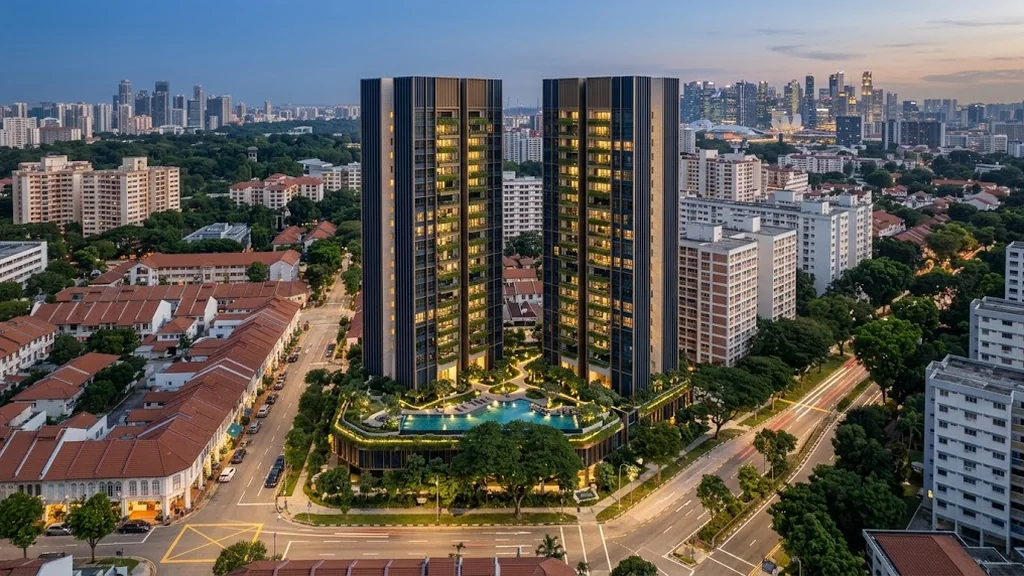
I will stick to what can be grounded: Dorset Gardens is the marketing name for an upcoming condominium project on https://dorsetsgarden.com.sg Dorset Road in Singapore’s District 8 area, near Farrer Park MRT. The site is tied to a government land sale at Dorset Road. A UOL-led consortium submitted the top bid in October 2025 for S$524.3 million, said at about S$1,338 psf ppr. The consortium is described as UOL, SingLand, and Kheng Leong Company, with one stated shareholding split of UOL 60%, SingLand 20%, and Kheng Leong 20%. One property page describes Dorset Gardens as planned as a 99-year leasehold condominium with about 428 homes across two 27-storey towers, while another describes the site as roughly 10,399 sq m and highlights proximity to Farrer Park MRT Station and schools.
What is not confirmed in the information I reviewed is the final, reliable pricing schedule or an official brochure with full price breakdown. Some marketing pages reference brochure downloads, price list registration, and showflat appointment booking. So if you see “pricing” being talked about, treat it as a process, not a single event. That process matters for timing.
Why “pricing update” is never a single moment
When people say “Dorset Gardens pricing,” they often mean two different things. One is the overall pricing stance, like whether the project is likely to price closer to the high end or the more mainstream end for that general District 8 catchment. The other is the practical price you can actually commit to, which depends on how the developer issues the price list, how the allocation is structured, and which units you are eligible to select when you get to the front of the queue.
The early preview often leaves you with partial information. You may be able to book viewings through Dorset Gardens book appointment flows, or download Dorset Gardens brochure materials, but the pricing you can transact with usually becomes more actionable only when a “price list” is issued through the registration channel or launch preview. That is why after registration, the waiting period feels like it has no direction.
In lived experience, this “no direction” period is when many buyers make one of two mistakes. They either revisit too late and miss the window where allocation rules start to tighten, or they revisit too often and burn attention and time chasing noise that does not yet reflect what can be confirmed. Neither approach helps.
The right approach is to understand what usually changes in the post-registration phase and what does not.
What actually changes after you register
From the marketing flow described for Dorset Gardens, there is a clear operational pattern: brochure downloads, price list registration, and showflat appointment booking exist as separate but related steps. That implies the developer’s workflow is staged.
In practical terms, you should expect changes in three broad categories, and you should only “re-gear” your decision-making when those categories move.
First, the price list becomes available in a more concrete form. Before that, any numbers you see can be indicative, and they may not map cleanly onto what is eventually offered on actual selection days.
Second, your eligibility to view or access the showflat can change. Sometimes access windows are staggered based on registration. Even if the project is the same, the way the buyer cohort is handled affects your ability to compare units with your own reference points.
Third, the project narrative can sharpen around what is being marketed as “final.” In some launches, buyers notice that the unit mix, the presentation of finishes, or the emphasis on certain locations or amenities gets tweaked over time. For Dorset Gardens, the verified context points to a 99-year leasehold plan and two 27-storey towers with about 428 homes. But in the post-registration period, the developer may still refine how those facts are presented and how the project details are bundled into brochures and appointment materials.
If you treat “pricing update” as tied to these operational changes, your timing becomes more rational.
When to revisit after registration, without losing your edge
You do not need to check constantly. You need to check at the moments when the odds are highest that something meaningful has updated.
Here is a simple rule I use: revisit when there is a potential change in either the pricing list availability, your showflat appointment access, or a clear shift in the developer’s materials you can compare side-by-side with what you saw earlier.
To keep it practical, you can set your revisit windows like this:
- Revisit once after your registration confirmation, but only if you have not received any concrete price list or appointment access details yet
- Revisit again when the brochure becomes downloadable in the exact format you can compare with what you previously saw
- Revisit when showflat appointment slots open up for your cohort, because that often correlates with when selections and pricing become more actionable
- Revisit close to the expected launch preview cadence, but avoid daily checking unless you see a specific status update that references price list issuance
- Revisit only after you have a clear reason, such as receiving a new price list registration confirmation or an updated pricing sheet format
That five-step structure is not about superstition. It is about reducing the chance that you will overreact to marketing language that has not yet turned into a transaction-ready price.

The “first numbers” trap, and how to avoid it
A lot of buyers remember the first number they saw and then treat it as a benchmark. For Dorset Gardens, there are hints of what the market could infer from the land bid context, such as the October 2025 top bid of S$524.3 million at about S$1,338 psf ppr, and the fact that the site is on Dorset Road in the vicinity of Farrer Park MRT. But you still cannot responsibly turn those into a finalized unit price for a buyer’s exact stack, size, and facing, because the verified context does not provide an official pricing schedule.
Here is the lived-experience part that matters. When people anchor on an early figure, they tend to ignore the difference between:
- a concept of “how the developer might price”
- and the final price you can actually choose and book under the issued price list
Early numbers may shift because the developer can adjust pricing bands based on demand. Demand can be influenced by broader market sentiment, buyer priorities, and how many comparable launches are competing around the same time. Even if you cannot name the exact reason for a pricing update, you can still protect yourself by refusing to treat the first figure as final until a price list is issued through the proper channel.
So, when you revisit after registration, your job is not to ask, “Did the price go up or down?” It is to ask, “Did the developer provide a price list format I can now compare meaningfully to the choices available to me?”
What to look for in Dorset Gardens pricing updates (without assuming too much)
Because the verified context does not include confirmed final pricing, you should look for evidence of a process change rather than trying to interpret every numerical tweak as a final signal.
When you revisit, focus on things like:
- whether a “price list” document has become available in a more complete, unit-relevant format through the registration flow
- whether the “direct developer price” messaging is still generic or has turned into a table-like, selection-ready list
- whether your showflat appointment booking process now references a specific launch preview timeline that typically precedes clearer pricing disclosures
- whether the brochure materials align with the same project facts you saw earlier, such as the plan for 99-year leasehold and two 27-storey towers with about 428 homes
If you only see changes in marketing headlines while the pricing list itself is still not available, you are likely seeing communication timing rather than pricing finalization.
This is also where a lot of buyer energy gets wasted. It is easy to assume “pricing update” means “new number.” In practice, it may only mean the developer refreshed the way the information is presented. If your goal is an investment-quality decision, you want changes you can verify and compare.
Revisit timing depends on your buyer profile
Not everyone should revisit at the same cadence because not everyone has the same constraints.
If you are someone who needs certainty for financing timelines, you should revisit with the aim of getting to a decision quickly once the price list becomes actionable through the registration channel. If you are someone who can wait for a second round of clarity, you can afford to be less urgent, but you still cannot let yourself drift into “never decide” mode.
There is also the practical factor of viewing. Dorset Gardens view showflat access is part of the marketing flow. Seeing the units and how they present can change how you evaluate whether the asking price is “reasonable for you,” even if the market price is not exactly what you predicted. In other words, revisit timing is not just about pricing. It is also about whether you can compare your expectations to what is actually shown.
A useful, grounded approach is to decide your decision deadline first, then work backwards.
For example, if you need to commit before you lose a short-term window to complete paperwork, you revisit early enough to capture the first fully usable price list you receive. If you can decide later, you revisit only when the pricing list format is updated or when new viewing windows open that may reveal changes to what units are available.
What to ask when you revisit (so your time has payoff)
When you re-engage after registration, do not ask open-ended questions like “Is there an update?” You will get the same kind of answer you already received during registration.
Instead, ask targeted questions that force clarity about what changed since your last interaction. Since the verified context references price list registration, brochure downloads, and showflat appointment booking, you can structure your questions around those operational steps.
Here are five examples of questions that keep the conversation specific:
- Can you confirm whether the “price list” is now available in a unit-selection ready format for Dorset Gardens, not just indicative pricing
- Are my registration details linked to a specific appointment window for the Dorset Gardens view showflat session
- If the pricing list changed since my registration, what document version date or update timestamp should I use as the reference
- Does the Dorset Gardens brochure I can download now match the latest release for the two 27-storey towers and the about 428 homes plan
- What is the earliest timeline I should plan for if I intend to reserve a unit once the price list is issued
This kind of questioning works because it is hard to dodge. You are not asking for marketing repetition, you are asking for process confirmation tied to the materials you actually need.
How “new launch” dynamics affect your pricing expectations
Dorset Gardens is described as an upcoming new condominium project, a marketing name often used during the Dorset Gardens new launch phase. In these phases, pricing often looks like a moving target because the developer’s messaging is designed to convert interest into registrants and then into selections.
Here is the trade-off buyers face.
If you wait too long, you might find the more desirable unit types are harder to secure under the selection outcomes. If you decide too early, you might be paying against an understanding that later becomes outdated when the full price list is issued in a more precise form.
The best middle path is to revisit at the points when pricing becomes documentable, not when social media or casual chatter suggests a change.
Even without confirmed final pricing details in the reviewed information, the existence of dedicated price list registration implies that once a price list is released, you will have something concrete to work with. Your revisit timing should be optimized around receiving that concrete item.
Dorset Gardens “project details” matter, but not the way you think
Buyers often focus on the biggest facts: location, tenure, number of homes, and tower count. The verified context gives you some real anchors here: 99-year leasehold is one stated plan, and the development is described as about 428 homes across two 27-storey towers. The site’s size is also described as roughly 10,399 sq m and it is near Farrer Park MRT Station, with nearby schools referenced in one property page.
But here is the subtlety. These facts help you decide whether the project is coherent for your lifestyle, but they do not tell you whether the price is right for the units you might actually buy. Two buyers can both say they like the project, yet reach different conclusions because one cares about certain unit types or view considerations and the other cares more about entry price bands.
So when you revisit after registration, do not only ask “What is the price now?” Ask “What do the updated materials allow me to compare?”
If the only thing that changed is a marketing update while your unit options remain unclear, then your information advantage has not improved. If the new brochure or price list format allows you to match unit choices to your priorities, then you are ready to make a decision.
A practical example of a good revisit flow
Let me describe a realistic sequence that does not require any speculation about final numbers.
Suppose you registered for Dorset Gardens through a marketing flow that offered brochure downloads and price list registration. After registration, you do not get a selection-ready price list immediately. Instead, you watch for the next operational step: either the brochure becomes fully accessible in the latest format, or the showflat appointment booking opens for your cohort.
In that scenario, your first revisit can be quiet. You check whether the brochure you can download now includes the key project details that were referenced earlier. Then you wait for the showflat appointment availability. Once a showflat slot becomes bookable, it is usually the moment when the process becomes more “transaction adjacent,” because the developer wants your interest to convert into a selection plan.
At that point, you revisit and ask for confirmation that the pricing list information you receive is the version you should use for unit selection. You do not treat any earlier indicative number as final. You compare what is actually offered to you when you book or prepare to reserve.
That approach is not about being cautious. It is about being precise.
Edge cases that can make you revisit sooner
There are a few situations where a “wait for the next scheduled update” approach becomes the wrong strategy.
If you learn through the registration flow that your showflat appointment access is expiring or that the appointment windows are limited, you should revisit sooner to ensure you can view and clarify what you need. Similarly, if your registration confirmation indicates that a price list or booking window is time-bound, you should adjust your revisit cadence to match that timeline.
One more edge case is the buyer who needs clarity not for investment, but for personal timing. For example, if you are planning around a family timeline and cannot tolerate uncertainty for many months, your revisit timing should prioritize decision readiness once the price list becomes actionable.
The key is not to chase every rumor, it is to react to concrete operational constraints that you can verify.
What you should do right now, if you are waiting for Dorset Gardens pricing
Since URA - Release of 2nd Quarter 2026 real estate statistics the verified context does not provide a confirmed final pricing schedule, the best “right now” action is not to guess price movements. It is to put your decision process into a state where you can respond fast once the proper documents are available.
Practically, that means:
- Keep your registration details ready, so when the brochure downloads or price list registration confirmation updates you can cross-check quickly
- Decide in advance what would make you revisit meaningfully, for example “price list available in a selection-ready format” rather than “new marketing page posted”
- If you are likely to book a Dorset Gardens view showflat session, prepare your questions so you can get answers without spending the viewing time on administrative back-and-forth
- Treat the land bid context as a background anchor, not as a direct substitute for actual pricing on the price list
Dorset Gardens pricing updates can feel slow because the process uses staged marketing touchpoints. That slowness is exactly why a disciplined revisit schedule helps. You are not trying to win a guessing game, you are waiting for documentable, decision-relevant information.
The bigger lesson after Dorset Gardens registration
After you go through one registration cycle, you start to notice a pattern across many new launches: the information that matters arrives in formats tied to eligibility, booking, and selection. That means “when to revisit” is less about calendars and more about process signals.
For Dorset Gardens, the verified context supports that the marketing pages revolve around brochure downloads, price list registration, and showflat appointment booking. So your revisit timing should align with those signals. When the process unlocks the next actionable step, your attention becomes valuable again.
Until then, the safest position is to avoid turning early impressions into commitments you have not verified against a proper price list and your actual unit options.
If you want, tell me what stage you are at now, for example registered but no brochure access yet, or registered and showflat slots open, and I can suggest a revisit cadence tailored to that specific moment.